
A National Symbol Woven into the City’s Fabric
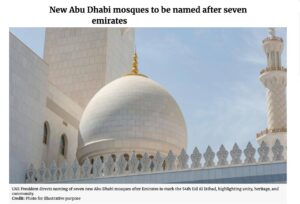
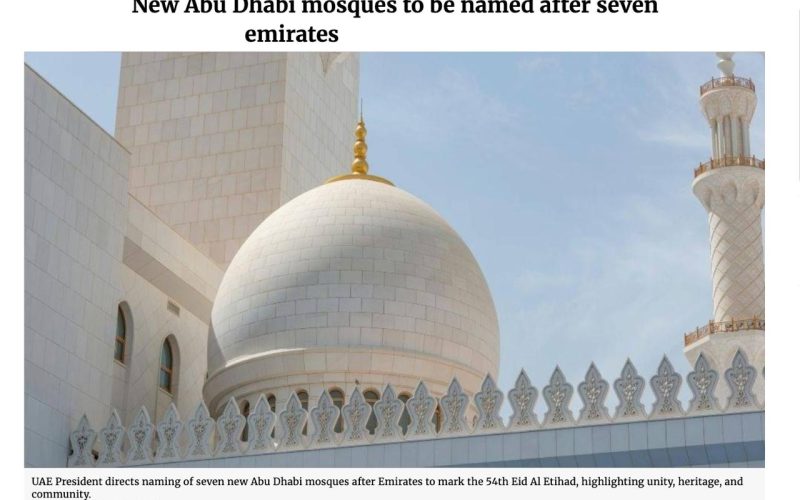
In a move rich with symbolic meaning, President Sheikh Mohamed has directed that seven new mosques in Abu Dhabi be named after each of the UAE’s seven emirates. More than just places of worship slated to open in January, these structures—collectively accommodating 6,000 worshippers—are a powerful, physical manifestation of national unity. Their modern architectural style, blending Islamic heritage with contemporary innovation, does more than beautify neighborhoods; it strategically embeds a profound sense of shared identity and progressive values into the daily lives of Abu Dhabi’s residents, directly enhancing the social and cultural bedrock that underpins long-term real estate value.
The “Civic Anchor” Effect: Beyond Spiritual Significance
While their primary purpose is spiritual, the introduction of these landmark mosques acts as a “civic anchor” within their respective communities. This creates a tangible, positive ripple effect on the surrounding urban environment and its appeal.
-
Elevating Community Prestige and Identity: A mosque named after an emirate is not a standard neighborhood facility; it is a destination of significance. Its presence elevates the status of the entire area, bestowing a sense of importance and curated place-making that generic developments lack. For residential communities, proximity to such a named landmark becomes a unique selling point, suggesting stability, reverence, and quality of life.
-
Catalyzing Neighborhood Completeness and Walkability: These mosques will naturally become hubs of daily and weekly activity. This increases foot traffic and supports the development of complementary local amenities—coffee shops, small retail, and green spaces—creating more vibrant, walkable, and self-sufficient neighborhoods. This “liveability quotient” is a key driver for both rental demand and property values.
-
Architecture as an Amenity: The commitment to a modern architectural style that innovatively honors tradition ensures these buildings will be aesthetic landmarks. In a city where aesthetics and innovation are highly valued, living within view of such a structure adds an intangible layer of cultural and visual capital to a property, differentiating it from areas with only utilitarian infrastructure.
Strategic Implications for Perceptive Stakeholders
The placement and naming of these mosques offer subtle cues for those watching the city’s evolution.
-
For Urban Planners and Developers: The locations chosen for these significant projects signal areas receiving high-level investment and attention. They highlight neighborhoods prioritized for holistic community development, making adjacent land parcels more attractive for future residential or mixed-use projects that align with this vision of integrated living.
-
For Real Estate Investors and Homebuyers: Properties in the immediate vicinity of these mosques are likely to benefit from an “amenity premium.” The combination of spiritual convenience, architectural beauty, and the reinforced sense of community creates a compelling package for owner-occupiers, particularly families, leading to stable demand. Investors should view these zones as areas with strong fundamentals for long-term, resilient value appreciation.
-
For the Broader Market Narrative: This initiative reinforces Abu Dhabi’s brand as a city that invests thoughtfully in the social and cultural infrastructure of its communities. It projects an image of harmony, permanence, and thoughtful growth—attributes that attract long-term capital and a stable, high-quality resident base, which are the ultimate foundations of a healthy real estate market.
The Bottom Line: Building Community, Cementing Value
The “Emirates Mosques” project transcends religious infrastructure. It is a masterclass in nation-building at the urban level, using architecture and symbolism to strengthen communal bonds. In real estate terms, these mosques are not just structures; they are value-generating civic institutions that enhance the qualitative appeal of their surroundings.
By investing in landmarks that foster identity, beauty, and community cohesion, Abu Dhabi is not only honoring its union but also strategically enriching the very fabric of its neighborhoods, creating more desirable and ultimately more valuable places to live.
Understanding how major civic investments influence local property markets requires nuanced, on-the-ground insight. To explore how specific communities in Abu Dhabi are being transformed by strategic infrastructure, request a detailed area analysis.