
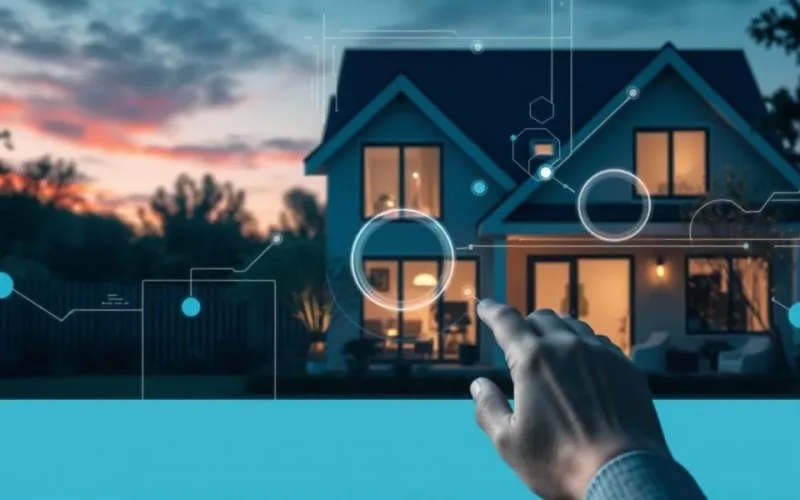
Beyond the Remote Control: When Your Apartment Becomes a Tech Stock
Walk into a new Dubai property listing, and the agent will almost certainly tap a tablet to demurely lower the blinds, declaring it a “smart home.” For years, this has been the standard pitch—a convenient gadget, a neat party trick. But in 2025 and beyond, that narrative is dangerously obsolete. The conversation around smart home technology in Dubai has irrevocably shifted from “nice-to-have” to “non-negotiable value driver.” What was once a luxury gadget is now a fundamental component of a property’s financial durability, operational efficiency, and security. The question is no longer if it adds value, but how much value it adds, and more critically, which systems actually move the needle for buyers and tenants.
From Gimmick to Gold Standard: The Three Pillars of Genuine Value
True value-add smart home technology in Dubai’s premium market has evolved beyond mood lighting. It now rests on three pillars that directly impact a property’s bottom line and appeal:
1. The “Operational Alpha” – Slashing the Hidden Cost of Ownership
For landlords and owner-occupiers alike, the single greatest value of a smart home is predictable cost reduction. Advanced systems deliver tangible ROI:
-
Intelligent HVAC & Climate Control:Â Systems that learn patterns and adjust based on occupancy and Dubai’s extreme external temperatures can slash DEWA (District Cooling) bills by 20-30%. This isn’t a guess; it’s a direct transfer from utility bills to owner profit.
-
Integrated Leak Detection & Automatic Shut-off: A single burst pipe can cause tens of thousands in damages and void insurance claims without immediate intervention. Smart sensors that automatically shut off the water main and alert the owner or property manager within seconds are no longer a luxury—they are essential risk mitigation in a city where many owners are overseas.
-
Predictive Maintenance Alerts:Â Smart systems on appliances (fridges, AC units) can forecast failures before they happen, allowing for scheduled, low-cost repairs instead of emergency, high-cost replacements during a tenant’s stay.
2. The “Security Premium” – Peace of Mind as a Marketable Asset
In a market catering to a global, often absentee-owner demographic, security is paramount. Smart tech provides a demonstrable premium:
-
Biometric & Virtual Access:Â Keyless entry via smartphones or fingerprints eliminates the risk and hassle of physical key management for landlords, allowing seamless access for maintenance or new tenants without a single key change.
-
AI-Powered Video Surveillance:Â Modern systems don’t just record; they analyze. They can distinguish between a pet, a person, and unusual loitering, sending specific, actionable alerts. For a luxury villa or a high-floor apartment, this integrated layer of security is a powerful selling point that commands a rent and sale premium.
3. The “Sustainability & Convenience” Dividend – Aligning with Market Demand
This is where lifestyle meets investment. Dubai’s push towards ESG (Environmental, Social, and Governance) and sustainability isn’t just government policy; it’s becoming a buyer preference.
-
Energy Monitoring Dashboards: Properties that provide real-time data on energy and water consumption appeal directly to the environmentally conscious, tech-savvy tenant—a growing and desirable demographic.
-
Ecosystem Integration:Â A home where lighting, audio, climate, and entertainment are seamlessly controlled via a single, intuitive interface (like Control4, Savant, or a well-configured Apple Home) offers a convenience premium. It signals a modern, finished, and high-quality build.
The Investor’s Checklist: Separating the Wheat from the Chaff
Not all “smart” is created equal. When evaluating a property, ask these critical questions:
-
Is it an Integrated System or a Bag of Gadgets? Value lies in a single, professionally installed system (e.g., KNX, Control4) with a central hub. Avoid properties with a dozen different, unconnected apps for lights, plugs, and cameras—this is a future maintenance nightmare.
-
Who Owns the Platform? Ensure the system uses widely supported, manufacturer-agnostic protocols (like Matter, an emerging standard). Be wary of proprietary systems from obscure brands that may become obsolete or unsupported.
-
Is it Developer-Installed or an Afterthought? Systems baked into the construction phase (pre-wired) are more robust, reliable, and aesthetically pleasing than retrofitted solutions with visible wires and dongles.
-
What is the True Net Operating Impact? Request data or estimates on utility savings and ask about included warranties and service contracts. The system should pay for itself over time.
The Verdict: A Fundamental Shift in Asset Class Definition
In Dubai’s maturing real estate landscape, a “smart home” is no longer a gadget. For the sophisticated investor, it is a critical component of asset resilience. It directly enhances a property’s income potential (through lower operational costs and higher rentability), protects its capital value (through risk mitigation and modern appeal), and ensures its long-term relevance in a market increasingly segmented between basic and premium offerings.
The premium is no longer for the technology itself, but for the certainty, efficiency, and security it engineers into the asset. In a city built on the future, a “dumb home” is becoming a liability. The smart money is, unequivocally, on the smart home.
Curious about the specific ROI of smart home systems in your current or prospective Dubai property? Understanding the installation costs, utility savings, and rental premium is key.
We’ve developed a proprietary “Smart Home Value Assessment” tool that calculates the potential return for any specific property.
👉 Click here to submit your property details for a free, personalized Smart Home ROI report.