
Operating a short-term rental in Dubai is a regulated activity overseen by the Department of Economy and Tourism (DET). As of 2025, the process is clear, and compliance is mandatory to avoid significant penalties.
The table below summarizes the core aspects of the legal framework for you.
| Aspect | Short-Term Rental (Holiday Home) | Long-Term Rental |
|---|---|---|
| Governing Body | Department of Economy and Tourism (DET) | Real Estate Regulatory Agency (RERA) |
| Primary License/Permit | Holiday Home License & Unit Permit | (Governed by tenancy contracts) |
| Income Potential | Higher, but seasonal and variable | Lower, but stable and predictable |
| Income Stability | Fluctuates with tourism demand | Steady, fixed annual rent |
| Flexibility for Owner | High; can block dates for personal use | Low; property is leased for extended periods |
| Management Level | High; requires active management or a property manager | Low; minimal ongoing management |
| Key Regulation Examples | – Must register on DET Holiday Homes portal – Collect & remit Tourism Dirham fee – Adhere to community rules |
– Rent increases capped by RERA’s Rental Index – Eviction procedures are tenant-friendly |
📠Your Step-by-Step Guide to Legal Operation
To operate legally, you must follow a defined process. Here is a breakdown of the essential steps based on the 2025 regulations.
-
Step 1: Check Eligibility & Gather Documents
Before applying, ensure your property is a fully furnished apartment or villa in a building that allows holiday home activity. You will need a No Objection Certificate (NOC) from the building owner or management. Essential documents include:-
Emirates ID of the property owner
-
Title deed or valid lease agreement (if you are a tenant)
-
Recent DEWA (utility) bill
-
Written landlord authorization using the DET template (if subletting)
-
-
Step 2: Apply via the DET Holiday Homes Portal
The entire application process is managed online through the official DET Holiday Homes portal. You will need to: -
-
Register as an operator (individual or commercial) and pay the AED 1,520 annual registration fee (which includes a knowledge and innovation fee).
-
Add your property unit and self-classify it as “Standard” or “Deluxe”.
-
Pay the applicable permit fee, which is tiered based on the number of bedrooms, ranging from around AED 370 for a studio to AED 1,270 for a 4+ bedroom unit.
-
-
Step 3: Pass the Property Inspection
After submitting your application and fees, DET will conduct an on-site inspection to verify that your property meets health, safety, and quality standards. To pass, ensure you have:-
Smoke detectors and fire extinguishers installed.
-
The property is fully furnished and equipped with expected amenities.
-
Emergency contact information and evacuation plans are clearly posted.
-
-
Step 4: Fulfill Ongoing Compliance Duties
Once licensed, you have recurring responsibilities:-
Guest Registration: Log guest check-in and check-out details in the DET portal within the required timeframe.
-
Tourism Dirham Fee: Collect a nightly fee from guests (AED 10 for Standard, AED 15 for Deluxe, per room) and remit it to DET monthly.
-
License Renewal: Your holiday home license and permit are valid for one year and must be renewed annually.
-
âš ï¸ Common Pitfalls and How to Avoid Them
Many legal issues arise from overlooking a few key areas. Being aware of these can save you from serious penalties.
-
Operating Without a License: This is the most severe violation. Fines for non-compliance can reach up to AED 100,000, and authorities are actively monitoring listings. Never list your property without a valid DET permit.
-
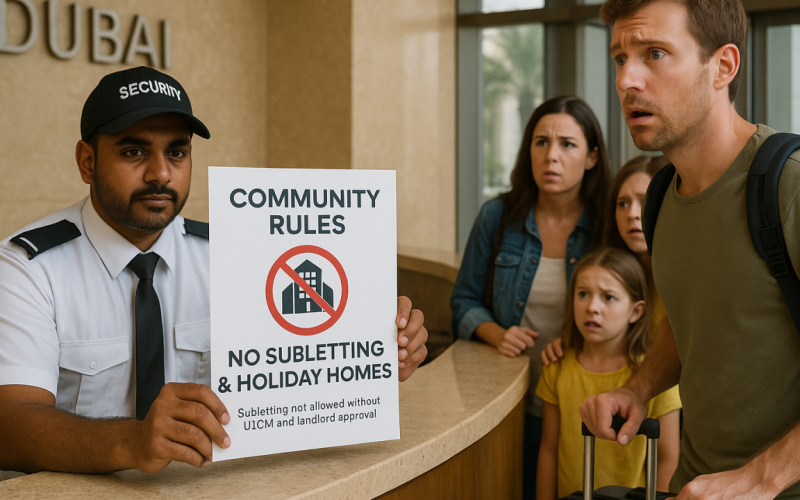
Skipping the NOC or Ignoring Building Rules: Even with a DET license, you must comply with your building’s internal rules. Some communities ban short-term rentals entirely. Operating without a No Objection Certificate (NOC)Â or against building policies can lead to complaints from neighbors and legal action from your building management.
-
Inadequate Insurance: Standard home insurance often does not cover short-term rental activities. It is strongly recommended to obtain comprehensive property and liability insurance to protect yourself from guest-related incidents or property damage.
📈 Is a Short-Term Rental the Right Choice for You?
While the potential for higher income exists, it comes with more active involvement. Consider your personal goals:
-
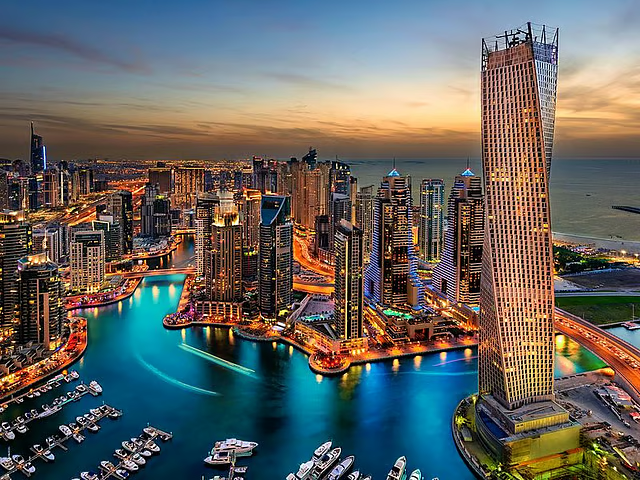
Choose Short-Term Rentals if: You own a property in a high-demand tourist area (like Dubai Marina, Downtown, or Palm Jumeirah), are prepared for active management or willing to hire a professional manager, and can handle income variability for higher potential returns.
-
Choose Long-Term Rentals if: You prioritize stable, passive income with minimal management hassle, own a property in family-oriented communities, and want to avoid the risks of seasonal vacancy.
I hope this 2025 update provides you with a clear path forward. If you have a specific community in mind, I can help you explore its potential.