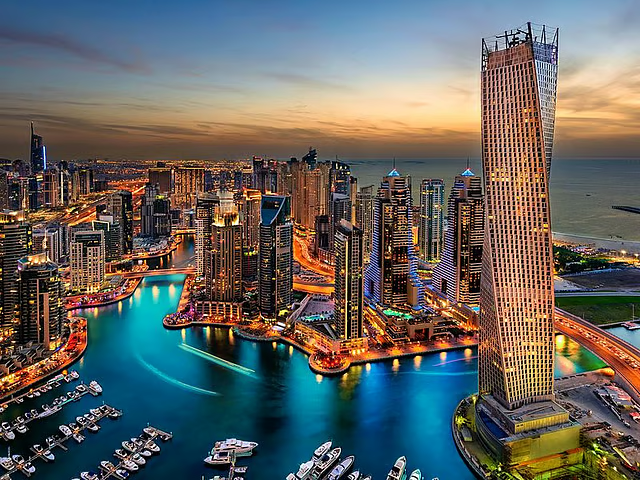

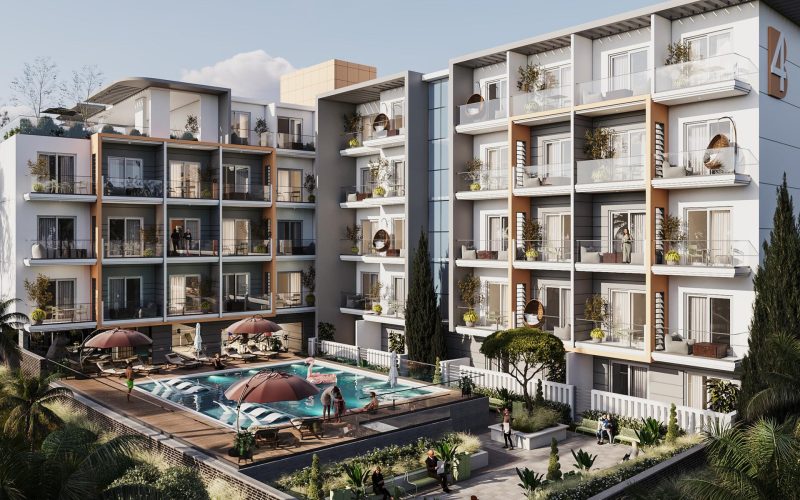
Dubai’s property market is never dull. Known for its dramatic cycles of boom and correction, the emirate has, since the pandemic, embarked on one of its most sustained and robust recoveries. Fueled by economic reforms, an influx of global talent and wealth, and its safe-haven status, prices have soared past previous peaks.
But what’s next? Is this growth sustainable, or is another correction on the horizon? This analysis breaks down the likely trajectory of Dubai’s residential property prices—for both apartments and villas—on a quarter-by-quarter basis through 2026. We’ll examine the key drivers, potential risks, and what to expect in different market segments.
A Quick Note on “Predictions”:Â Real estate is influenced by unpredictable global events. This forecast is based on current trends, government policy, and economic data. Think of it as a well-informed roadmap, acknowledging that detours are always possible.
Executive Summary: The High-Level Forecast
-
Overall Trend:Â Moderating growth, transitioning from a rapid boom to a stable, healthy market. We expect single-digit annual percentage increases on average, not the double-digit jumps of 2021-2023.
-
Market Divergence: The market will not move uniformly. Prime and luxury properties (e.g., Palm Jumeirah, Emirates Hills) will show more resilience and stronger growth. Mid-market and affordable areas (e.g., Dubai South, Jumeirah Village Circle) will see more modest, steady appreciation. Oversupplied areas may see stagnation or minor corrections.
-
Villas vs. Apartments:Â The high demand for spacious, high-quality villas and townhouses will keep this segment outperforming the apartment market, though the gap will narrow.
-
Rental Market:Â Rents are expected to remain high but stabilize, increasing the appeal of ownership for long-term residents.
To understand the future, we must first look at the present. As of mid-2025, the Dubai market is characterized by:
-
Record-High Transactions:Â Sales volumes and values are at or near historical highs.
-
Strong Government Initiatives:Â Policies like long-term visas (Golden Visa), business-friendly reforms, and a focus on attracting global corporations and talent continue to underpin demand.
-
High-Interest Rate Environment:Â Globally elevated interest rates have increased mortgage costs, cooling some mortgage-dependent demand and favoring cash buyers and investors.
-
Increased New Launch Activity: Developers are actively launching new projects to capitalize on demand, which will eventually increase supply.
Q1 2025 (January – March)
-
Prediction: Stable to Slight Growth (0.5-1.5% QoQ). The post-frenzy hangover begins. The market will digest the rapid price increases of 2024. Price growth will slow noticeably as higher mortgage rates continue to impact a segment of buyers. The focus will shift from rapid appreciation to stable, income-generating assets.
-
Key Driver:Â Market consolidation and a re-evaluation of pricing by both buyers and sellers.
-
Risk to Watch:Â A significant increase in new project launches could shift the balance towards buyers in certain areas.
Q2 2025 (April – June)
-
Prediction: Sideways Movement (0-1% QoQ). The slowdown becomes more apparent. We may see price stagnation in some areas that experienced the most aggressive growth, particularly in the apartment segment. Well-located villas will continue to see modest gains. This is a healthy “plateau” phase for the market.
-
Key Driver:Â Increased buyer selectivity and negotiation power.
-
Risk to Watch:Â Oversupply concerns in specific micro-markets.
Q3 2025 (July – September)
-
Prediction: Summer Stability (0.5-1% QoQ). Similar to 2024, the summer will be quiet. The difference will be a more balanced market between buyers and sellers. Prices are unlikely to fall but will struggle to find upward momentum. This period may present good opportunities for discerning buyers to negotiate.
-
Key Driver:Â Low transaction volumes typical of the season.
-
Risk to Watch:Â Any unexpected global financial event.
Q4 2025 (October – December)
-
Prediction: Renewed, Moderate Strength (1-2% QoQ). The seasonal pickup will return, but with less ferocity than in 2024. The market will be driven by fundamentals rather than speculation. Prime areas will outperform the broader market.
-
Key Driver:Â If global interest rates begin to fall, it could rejuvenate mortgage-driven demand.
-
Risk to Watch:Â The pace of new supply delivery versus absorption rates.
2025 Annual Price Growth Forecast:Â ~4-6%. A clear shift to a mature, stable growth phase.
2026: The Year of Maturity & Fundamental-Driven Growth
Q1 2026 (January – March)
-
Prediction: Fundamental Growth (1-1.5% QoQ). The market’s performance will be tightly linked to Dubai’s economic health. Positive indicators like population growth, GDP expansion, and corporate relocations will directly translate into steady price support. The era of explosive growth is over.
-
Key Driver:Â Economic fundamentals and population demographics.
-
Risk to Watch:Â Global economic conditions.
Q2 2026 (April – June)
-
Prediction: Consistent Performance (1-1.5% QoQ). The market continues on a stable path. Differentiation between areas will be stark. Proximity to key infrastructure (e.g., Metro, Expo City), community amenities, and building quality will be the primary determinants of value.
-
Key Driver:Â Quality of inventory and location.
-
Risk to Watch:Â Geopolitical events affecting regional stability.
Q3 2026 (July – September)
-
Prediction: Resilience (0.5-1% QoQ). The market demonstrates its new-found maturity by weathering the summer slowdown with minimal price volatility. Investor confidence in the market’s stability grows.
-
Key Driver:Â Long-term investor holding patterns.
-
Risk to Watch:Â A sudden surge in off-plan supply.
Q4 2026 (October – December)
-
Prediction: Strong Finish (1.5-2% QoQ). Ending the year on a solid note, aligned with Dubai’s broader economic trajectory. The market looks well-positioned for sustained, long-term growth rather than short-term spikes.
-
Key Driver:Â Year-end economic performance and global investor sentiment.
-
Risk to Watch: The “unknown unknowns” – black swan events.
2026 Annual Price Growth Forecast:Â ~5-7%. A healthy, sustainable rate of appreciation for a mature global city.
Key Factors That Will Shape the Market
-
Government Policy:Â The UAE government is the most powerful market maker. Continuation of pro-growth policies, visas, and business reforms is critical. Any changes to property ownership laws for foreigners could significantly impact demand.
-
Global Economic Climate:Â Dubai is a global hub. A major recession in Europe or Asia, or persistently high interest rates in the US, could reduce foreign investment flows.
-
Oil Prices:Â While Dubai’s economy is diversified, high oil prices boost confidence and liquidity across the GCC, indirectly benefiting the property market.
-
Supply Dynamics:Â The balance between new project launches and actual handovers is crucial. A flood of completed units in a short period could temporarily suppress prices in specific areas.
-
Currency Strength:Â Dubai’s property is priced in Dirham (pegged to the USD). A strong USD makes it more expensive for buyers from Europe, Asia, and other regions, potentially dampening demand.
Recommendations for Different Stakeholders
-
For Buyers/End-Users:Â The shift towards a balanced market in 2025 will provide more opportunities to negotiate and choose without the frenzy of bidding wars. Focus on quality, location, and community. If you find a suitable property, it remains a good long-term investment.
-
For Investors:Â The “flip for a quick profit” strategy is fading. Focus on buying quality assets with strong rental yield potential (4-6%+). Consider property management costs. Off-plan purchases should be from reputable developers in well-established locations.
-
For Sellers:Â The peak pricing frenzy is ending. To sell in 2025-2026, realistic pricing and presenting a well-maintained property will be essential. The advantage is shifting towards the buyer.
Conclusion: A New Era of Stability
The forecast through 2026 suggests Dubai is successfully transitioning from a volatile, cycle-driven market to a more mature and stable one. The rollercoaster is slowing down.
The predicted quarter-by-quarter moderation in price growth is not a sign of weakness but of health. It indicates a market evolving from speculation to one grounded in economic fundamentals, population growth, and sustainable demand. While risks remain, primarily from the global economy, Dubai’s proactive government and its status as a premier global hub provide a strong foundation for steady, long-term appreciation in its real estate sector.
Table: Long-Term Investment Potential by Property Type (2026-2030)
| Property Type | Expected Annual Appreciation | Rental Yield Potential | Risk Profile | Suitable Investor Profile |
|---|---|---|---|---|
| Luxury Waterfront | 5-7% | 5-6% | Low-Medium | Long-term, capital preservation |
| Mid-Market Apartments | 4-6% | 7-9% | Medium | Yield-focused, balanced |
| Affordable Communities | 3-5% | 8-10% | Medium-High | Yield-focused, higher risk tolerance |
| Off-Plan (Prime Developers) | 7-10%* | N/A | High | Capital growth, speculative |
| *Pre-completion appreciation potential | Â | Â | Â |