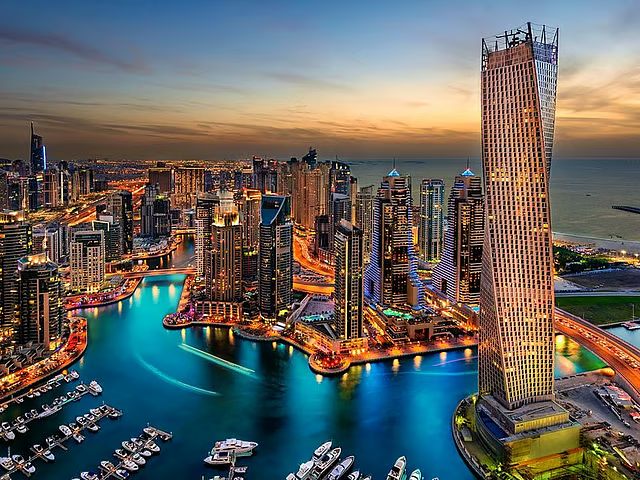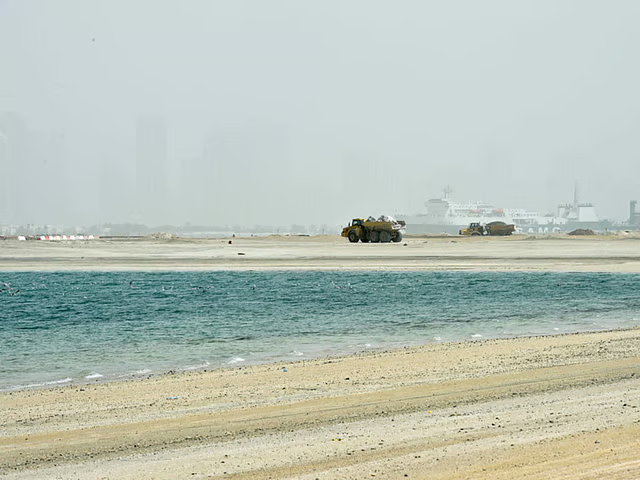

This is the dichotomy defining Dubai’s real estate landscape today. With Fitch Ratings forecasting a double-digit correction due to an incoming tsunami of 210,000 new units, investors are grappling with a critical question.
Is this the beginning of a Dubai property bubble burst, or a golden entry point in a maturing market?
Let’s dive beyond the headlines to unravel the truth behind the 2025 price correction fears and whether real estate oversupply in Dubai should keep you awake at night.
Why Fitch Sounds the Alarm
Fitch Ratings, a globally respected agency, predicts Dubai’s property prices will decline by up to 15% in 2025–2026, marking a sharp reversal after four years of explosive growth. This correction stems from a stark supply-demand imbalance:
-
Supply Surge: An estimated 210,000 new units are slated for delivery in 2025–2026, doubling the previous three years’ supply .
-
Demand Limitations: Dubai’s population growth, while robust at 5% annually, pales against the 16% annual supply growth .
-
Peak Prices: Fitch asserts that prices have either peaked in early 2025 or will do so soon, with declines likely starting in late 2025 .
The Oversupply Mechanics
The numbers are staggering:
-
2024: 30,000 units delivered.
-
2025: 90,000 units expected.
-
2026: 120,000 units projected (peak supply).
-
This deluge of new inventory could overwhelm demand, especially in mid-tier apartment segments, pressuring prices downward.
Oversupply vs. Demand: Is Dubai Really Overbuilding?
The Case for Oversupply
Critics argue that Dubai is repeating past mistakes—overbuilding without adequate demand absorption. Key risks include:
-
Localized Gluts: Areas like Jumeirah Village Circle (JVC) and Dubailand face potential oversupply, with 16,852 units slated for JVC alone in 2025–2027.
-
Rental Market Softening: Rental growth rates have already declined by 30 basis points to 7.4% in early 2025, signaling easing demand.
-
Developer Pressure: To maintain sales, developers may shift to 50% payment plans during construction (down from 70%), indicating weakening buyer leverage.
-
The Counterargument: Balanced Fundamentals
However, many experts dismiss doomsday scenarios, citing Dubai’s resilient demand drivers:
-
Population Growth: Dubai adds ~230,000 residents yearly, requiring 88,000 new homes annually to accommodate household sizes of 2.6 people .
-
Foreign Investment: Non-resident investors absorb ~20% of new launches, bolstering demand .
-
Phased Deliveries: Only 53–56% of projected units are typically completed on time due to construction delays, mitigating oversupply risks .
-
3. Market Resilience: Why This Isn’t 2008 Again
-
Stronger Financial Foundations
Dubai’s market has evolved since the 2009 crash, with safeguards now in place:
-
Bank Stability: UAE banks have reduced real estate exposure to 14% of loans (from 20% in 2022), with mortgages comprising only 8% .
-
Developer Deleveraging: Developers maintain healthier balance sheets, avoiding reckless speculation .
-
-
Government Backstops: Initiatives like the D33 Agenda and Dubai 2040 Master Plan support long-term economic diversification .
Prime Areas: Shielding Against Corrections
Luxury segments may defy the downturn:
-
Palm Jumeirah, Downtown Dubai, and Emirates Hills are expected to remain resilient due to limited supply and high demand from wealthy investors .
-
Branded Residences: Partnerships with luxury brands (e.g., Versace, Mercedes-Benz) sustain premium valuations .
-
-
4. Investor Strategies: Navigating the Correction
For Buyers: Seizing Opportunities
A correction could create ideal entry points:
-
Negotiation Power: Buyers may secure discounts, especially in oversupplied areas like JVC.
-
Payment Plans: Developers offering 50% during construction plans improve affordability .
-
Long-Term Focus: Prioritize properties in prime locations or near infrastructure hubs (e.g., Dubai South near Al Maktoum Airport).
The looming 210,000-unit supply influx is undeniably a risk, but it’s far from a apocalyptic scenario for Dubai’s real estate.
While a 15% price correction is likely, it represents a healthy market recalibration after years of unsustainable growth 124. For investors, this period offers a chance to pivot strategies, focus on prime locations, leverage developer incentives, and prioritize long-term fundamentals over short-term swings.
As Dubai’s market matures, those who embrace its cyclical nature—rather than fear it—will find opportunities amid the chaos.