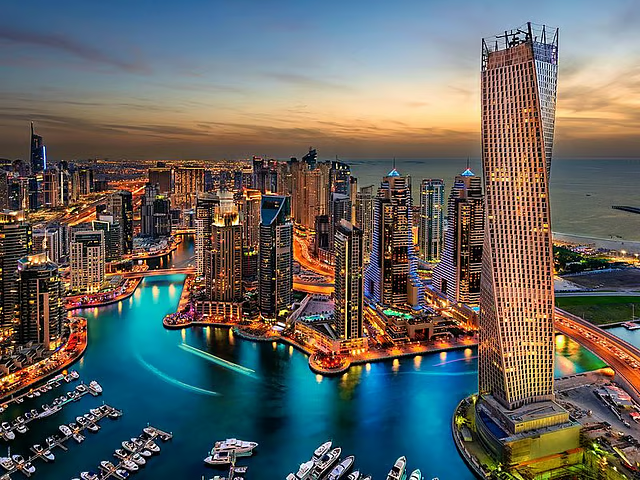

Dubai’s skyline has long been synonymous with architectural marvels, but today, it’s also becoming a global leader in sustainable real estate.
Driven by initiatives like the Dubai 2040 Urban Master Plan and the UAE Energy Strategy 2050, the city is rapidly transforming its urban landscape into a hub of eco-friendly innovation .
Here’s why green buildings are dominating the market:
Why Go Green?
-
Economic Savings: Green buildings in Dubai reduce energy and water consumption by up to 30%, translating to massive cost savings for homeowners and investors.
-
Higher Property Value: Studies show that green-certified properties command rental premiums of up to 9% and sell 20% faster than conventional units.
-
Healthier Living: Enhanced ventilation, non-toxic materials, and better indoor air quality contribute to improved well-being for residents 3.
Key Green Building Certifications in Dubai
Dubai’s commitment to sustainability is backed by rigorous certification systems:
-
LEED (Leadership in Energy and Environmental Design): The most widely adopted standard, focusing on energy efficiency and resource management .
-
Estidama: Abu Dhabi’s homegrown rating system, emphasizing water conservation and cultural relevance .
-
Al Sa’fat: Dubai’s own green building evaluation system, tailored for retrofitting existing structures .
-
WELL Building Standard: Focuses on human health, assessing air quality, lighting, and mental well-being .
| Certification | Focus Area | Key Benefit |
|---|---|---|
| LEED | Energy efficiency, resource management | Global recognition, high market value |
| Estidama | Water conservation, cultural alignment | Tailored to UAE’s climate and needs |
| Al Sa’fat | Retrofitting existing buildings | Improves energy/water efficiency |
| WELL | Human health and wellness | Enh occupant productivity and well-being |
What makes Dubai’s green buildings truly revolutionary is the integration of smart home technology. AI-driven systems are transforming homes into intuitive, energy-efficient spaces that adapt to your lifestyle.
Key Smart Home Trends in 2025
-
AI-Driven Automation: Systems like Google Nest learn your habits, adjusting climate control and lighting to optimize energy use.
-
For example, AI-powered cooling can reduce energy consumption by 20-30% in Dubai’s scorching climate .
-
Remote Monitoring: Homeowners can control security, temperature, and appliances from anywhere globally””perfect for Dubai’s mobile expat population .
-
Health-Focused Devices: Smart air purifiers adjust based on outdoor pollution levels, and circadian lighting systems support natural sleep cycles .
-
Predictive Maintenance: AI sensors detect issues like water leaks or HVAC inefficiencies before they become costly problems.
Spotlight: The Sustainable City, Dubai
This net-zero energy community is a benchmark for sustainable real estate.
The primary sustainable city in Dubai, named “The Sustainable City,” is located in the Dubailand district, situated on Al Qudra Road (D63).
It is a large-scale, mixed-use development focused on energy conservation, located about 20 minutes from Al Maktoum International Airport and surrounded by other communities like Arabian Ranches.
With solar panels, water recycling systems, and AI-driven energy management, residents enjoy 50% lower energy bills and 30% reduced water usage .
It’s a testament to how green initiatives and smart technology can create a self-sustaining urban oasis.
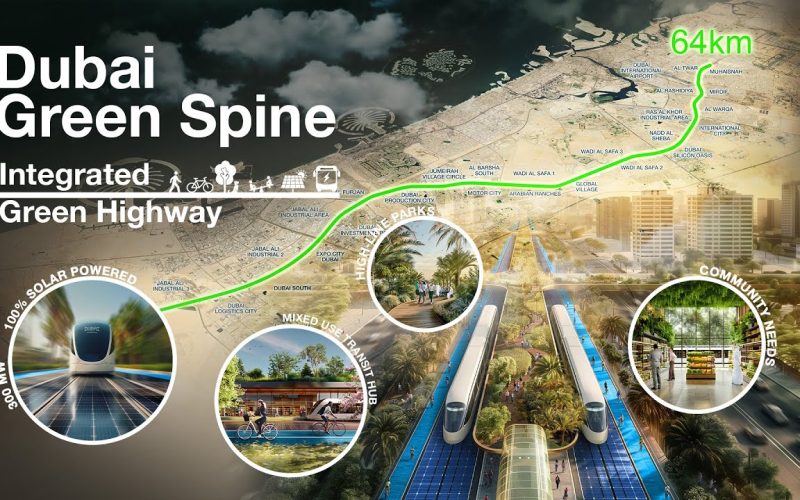
The momentum is only growing. Projects like the Dubai Green Spine“”a 64 km urban corridor lined with trees and renewable energy systems””aim to transform major highways into sustainable transit and community hubs.
Meanwhile, AI and IoT technologies will continue to evolve, making homes even more efficient and personalized.
By 2030, Dubai plans to ensure that 60% of its population lives within a 5-minute walk of green spaces, further enhancing quality of life .
The city is not just building structures; it’s crafting a legacy of resilience and innovation.