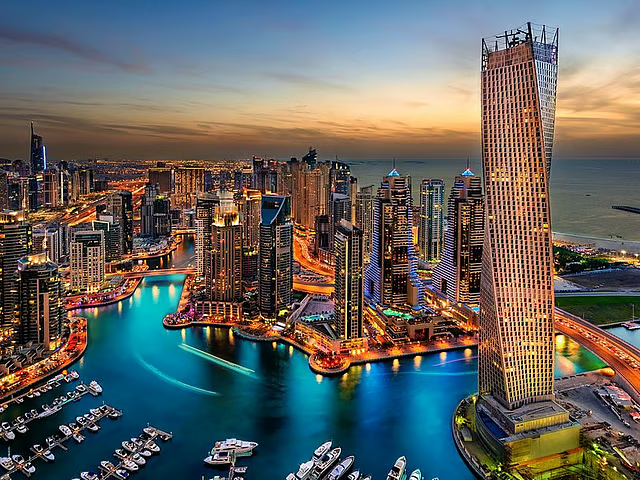

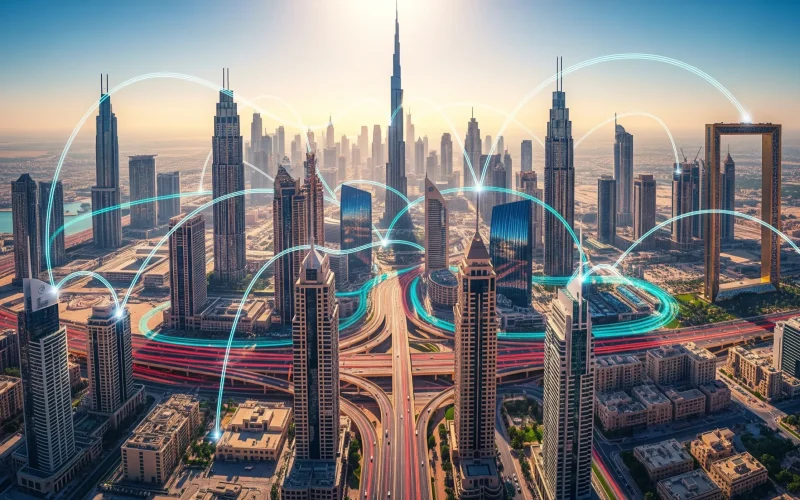
This isn’t science fiction””it’s the future envisioned by Dubai’s D33 Agenda, a bold strategy to double the emirate’s GDP by 2033 and cement its status as a global hub for innovation, trade, and sustainable living .
At the heart of this transformation lies real estate, a sector that contributed 8″“10% to Dubai’s GDP in 2025 and is poised to drive economic diversification through megaprojects, sustainable communities, and technological integration .
From the Dubai 2040 Urban Master Plan to tax-free investments and luxury developments, this blog explores how real estate is fueling Dubai’s post-oil future and why investors worldwide are capitalizing on this seismic shift.
1. The D33 Agenda: Blueprint for a Post-Oil Economy
What Is the D33 Agenda?
Launched in 2023, the D33 Agenda is Dubai’s roadmap to double its economic output over the next decade, reducing reliance on oil and fostering growth in sectors like technology, logistics, tourism, and real estate .
Key pillars include:
-
Economic Diversification: Boosting non-oil sectors to 50% of GDP by 2033, with real estate playing a pivotal role.
-
Foreign Investment: Attracting global capital through initiatives like the Golden Visa and 100% foreign ownership .
-
Innovation Hub: Positioning Dubai as a leader in AI, blockchain, and smart city technologies.
Real Estate as a Growth Engine
Real estate is central to the D33 Agenda, with projections indicating the sector could contribute 12″“15% to GDP by 2030 6. This growth is driven by:
-
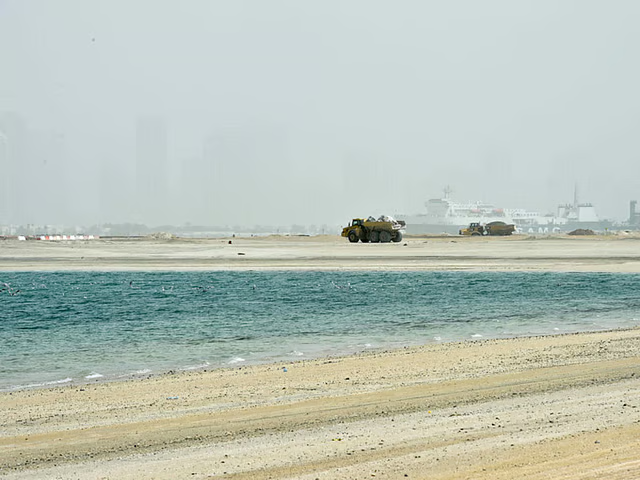
Megaprojects: Expansions like Palm Jebel Ali and Dubai Islands, valued at AED 51 billion in 2025 sales .
-
Population Boom: Dubai’s population is expected to reach 5.8 million by 2040, requiring 88,000 new homes annually .
-
Tourism Growth: Daily visitors are projected to increase by 53%, fueling demand for hospitality and short-term rental properties .
2. Dubai 2040 Urban Master Plan: Foundations for Growth
Sustainability and Livability
The Dubai 2040 Plan complements the D33 Agenda by focusing on sustainable urban development :
-
Green Spaces: Increasing parks and recreational areas by 105%, with 60% of land dedicated to nature reserves .
-
Smart Mobility: Ensuring 55% of residents live within 800 meters of public transport stations .
-
Mixed-Use Communities: Integrating residential, commercial, and leisure spaces to reduce commute times and enhance quality of life .
Economic Impact
The 2040 Plan directly supports the D33 Agenda by:
-
Creating Jobs: Infrastructure projects will generate employment in construction, technology, and hospitality.
-
Boosting Property Values: Areas near metro expansions and green corridors are projected to appreciate by 10″“15% annually.
-
Attracting Talent: Enhanced livability draws skilled expatriates, fueling demand for housing and commercial spaces.
Table: Key Components of the Dubai 2040 Plan
| Initiative | Target | Economic Impact |
|---|---|---|
| Green Space Expansion | 105% increase by 2040 | Higher property values in eco-communities |
| Public Transport Access | 55% of population within 800m of stations | Increased demand for transit-linked homes |
| Mixed-Use Developments | 20+ new communities by 2030 | Rental yields of 7″“9% in integrated zones |
| Affordable Housing | 17,080 units approved in 2025 | Addressing middle-income housing shortages |
3. Economic Diversification: Real Estate as a Catalyst
From Oil to Urban Innovation
Dubai’s economy has evolved from oil dependence to a diversified model where real estate contributes AED 120″“150 billion annually .
Key diversification strategies include:
-
Tourism and Hospitality: Projects like Dubai Islands and Expo City Dubai aim to attract 25 million visitors annually by 2030.
-
Technology Hubs: Dubai Silicon Oasis and Dubai AI District foster innovation, driving demand for tech-enabled office spaces .
-
Logistics and Trade: Expansion of Al Maktoum Airport and Dubai South free zone supports warehousing and industrial real estate .
Sectoral Contributions
Real estate’s role in diversification is multifaceted:
-
Direct GDP Contribution: Property development, sales, and rentals account for 8″“10% of GDP .
-
Indirect Impact: Construction, architecture, and property management add another 5″“7% .
-
Investment Multiplier: Every AED 1 invested in real estate generates AED 2.5 in ancillary sectors like retail and hospitality.
4. Investment Hotspots: Where Capital Is Flowing
Megaprojects and Emerging Zones
The D33 Agenda and Dubai 2040 Plan have ignited investment in these key areas:
-
Downtown and Business Bay:
-
Focus: Financial and commercial hubs with luxury residences.
-
Growth: Property values surged 20% YoY in 2025, driven by demand from multinational corporations.
-
-
Expo City Dubai:
-
Focus: Innovation and sustainability-themed district.
-
Growth: Rental yields of 6″“8% for tech-focused office spaces.
-
-
Dubai Silicon Oasis:
-
Focus: Technology and research hub.
-
Growth: Residential prices increased 15% in 2025, attracting expatriates in tech sectors.
-
-
Hatta:
-
Focus: Eco-tourism and sustainable living.
-
Growth: Government plans to develop eco-resorts and adventure facilities, with projected yields of 7″“9%.
-
Affordable Housing Initiatives
To support economic diversification, Dubai is addressing housing shortages for middle-income earners:
-
Government Schemes: Subsidized land and tax breaks for developers building sub-AED 1.5 million homes.
-
Locations: Dubailand, Dubai South, and International City offer yields of 8″“9%.
-
Social Impact: Affordable housing ensures a stable workforce for key sectors like logistics and services.
Affordable Housing Initiatives
To support economic diversification, Dubai is addressing housing shortages for middle-income earners:
-
Government Schemes: Subsidized land and tax breaks for developers building sub-AED 1.5 million homes .
-
Locations: Dubailand, Dubai South, and International City offer yields of 8″“9% .
-
Social Impact: Affordable housing ensures a stable workforce for key sectors like logistics and services.
5. Real Estate’s GDP Contribution: By the Numbers
Current and Projected Impact
Real estate is already a cornerstone of Dubai’s economy, with projections indicating accelerated growth under the D33 Agenda:
-
2025 Contribution: AED 135 billion (8.5% of GDP), driven by off-plan sales and luxury transactions.
-
2030 Projection: AED 220 billion (12% of GDP), fueled by population growth and infrastructure investments .
-
2033 Goal: AED 300+ billion (15% of GDP), aligning with D33 targets .
Comparative Global Standing
Dubai’s real estate sector outperforms many global cities:
-
Rental Yields: Average 6″“9%, compared to 2″“4% in New York or London .
-
Tax Advantages: No income tax on rentals or capital gains, enhancing investor returns .
-
Appreciation Rates: Luxury properties appreciated 13.8% in Q1 2025, surpassing global averages .
Table: Real Estate’s Role in Dubai’s GDP Growth
| Year | Real Estate GDP Contribution (AED) | Percentage of Total GDP | Key Drivers |
|---|---|---|---|
| 2025 | 135 billion | 8.5% | Off-plan sales, tourism growth |
| 2030 | 220 billion | 12% | Population boom, infrastructure projects |
| 2033 | 300+ billion | 15% | D33 diversification, technology integration |
Investor Strategies: Capitalizing on the D33 Agenda
For Short-Term Gains
-
Off-Plan Properties: Invest in pre-construction projects with payment plans, targeting 20″“30% capital growth upon completion.
-
Short-Term Rentals: Focus on tourism hotspots like Dubai Marina, where yields can reach 10″“12% .
Long-Term Opportunities
-
Sustainable Developments: Green-certified properties in areas like The Sustainable City offer 8% yields and lower operational costs.
-
Tech-Driven Assets: AI-enabled offices in Dubai Silicon Oasis cater to growing tech firms, with leases priced 20% above market rates .
Risks and Mitigation
-
Oversupply Concerns: Fitch warns of a 15% price correction in 2026; focus on prime locations to minimize risk .
-
Regulatory Compliance: Work with RERA-certified agents to navigate ownership laws and visa regulations.
Dubai’s D33 Agenda and the Dubai 2040 Urban Master Plan are not just visionary policies””they are actionable blueprints transforming the emirate into a global model for post-oil economic success.
Real estate, contributing 8″“10% to GDP today and poised to reach 15% by 2033, is the engine behind this transformation, driven by sustainable communities, technological integration, and unparalleled investor incentives.
As Dubai doubles down on diversification, investors have a unique opportunity to participate in a market where innovation meets profitability, and where every dirham invested today builds the foundation for a resilient, dynamic economy tomorrow.
“In Dubai, we don’t just build properties; we build economies.”