
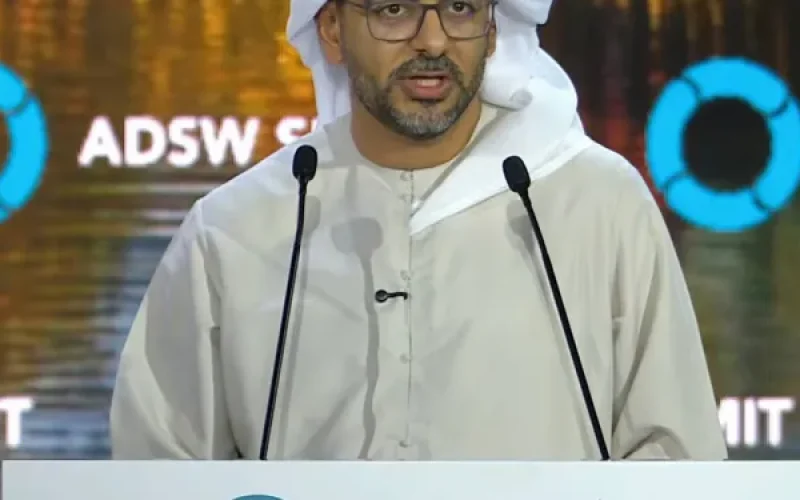
Aldar CEO: Climate Adaptation is a Core Business Imperative, Demanding Resilient Home Design
Abu Dhabi, UAE – Talal Al Dhiyebi, Group Chief Executive Officer of Aldar Properties, has declared that designing homes to withstand higher temperatures and severe climate conditions is an immediate business necessity, not a future consideration.
Speaking at Abu Dhabi Sustainability Week, Al Dhiyebi emphasized that climate change is already fundamentally reshaping how real estate is planned, financed, and operated, particularly in high-growth markets like the UAE.
“The reality of climate change is already with us, and adaptation is now a core business imperative,” stated Al Dhiyebi. “New developments must be planned around higher baseline temperatures, incorporate resilience against extreme weather, and embed climate risk assessments throughout the entire development lifecycle.”
The Long-Term Stakes of Today’s Design Decisions
The urgency is magnified by the scale of global construction yet to come. Al Dhiyebi highlighted that approximately half of all buildings expected to be standing in 2050 have not yet been built, meaning today’s design and planning decisions will define living conditions and asset viability for decades.
“When we plan with resilience in mind today, we reduce risk and cost tomorrow,” he explained, noting the profound long-term impact on resident safety, asset protection, and operational performance. This is critical given that the buildings and construction sector currently accounts for roughly one-third of global energy consumption and carbon emissions. Transforming how cities are built and operated is therefore essential to meeting international climate targets.
Scale and Responsibility: Aldar’s UAE Pipeline as a Case Study
Aldar’s own substantial development portfolio exemplifies this responsibility at scale. In 2025 alone, the company awarded development contracts worth Dh67 billion, with over Dh20 billion reinvested into the local economy through its in-country value program.
The company is currently developing more than 23,000 homes—a figure nearly seven times greater than its pipeline from four years ago. According to Al Dhiyebi, this rapid expansion mandates an unwavering focus on long-term sustainability, community well-being, and resilience. While tailored to each project, core sustainability principles form the foundation of every community Aldar builds, with homes designed to serve a broad demographic.
Evolving Affordability: From Housing Cost to Living Cost
Al Dhiyebi also outlined a strategic shift in addressing affordability, driven by population growth and evolving social needs. The focus is expanding from the upfront cost of housing to the broader concept of “affordable living.”
Modern communities, he argued, must be designed not just as collections of houses but as integrated, service-rich ecosystems. The priority is creating connected neighborhoods bolstered by essential amenities—such as retail, healthcare, and green spaces—and enhanced with features that improve daily quality of life, thereby reducing the long-term cost of living for residents.
This holistic approach positions climate resilience and community well-being as inseparable pillars of sustainable, future-proof real estate development.