
In the narrative of Dubai’s real estate and hospitality landscape, strategic partnerships often serve as the pivotal plot points that define new eras.
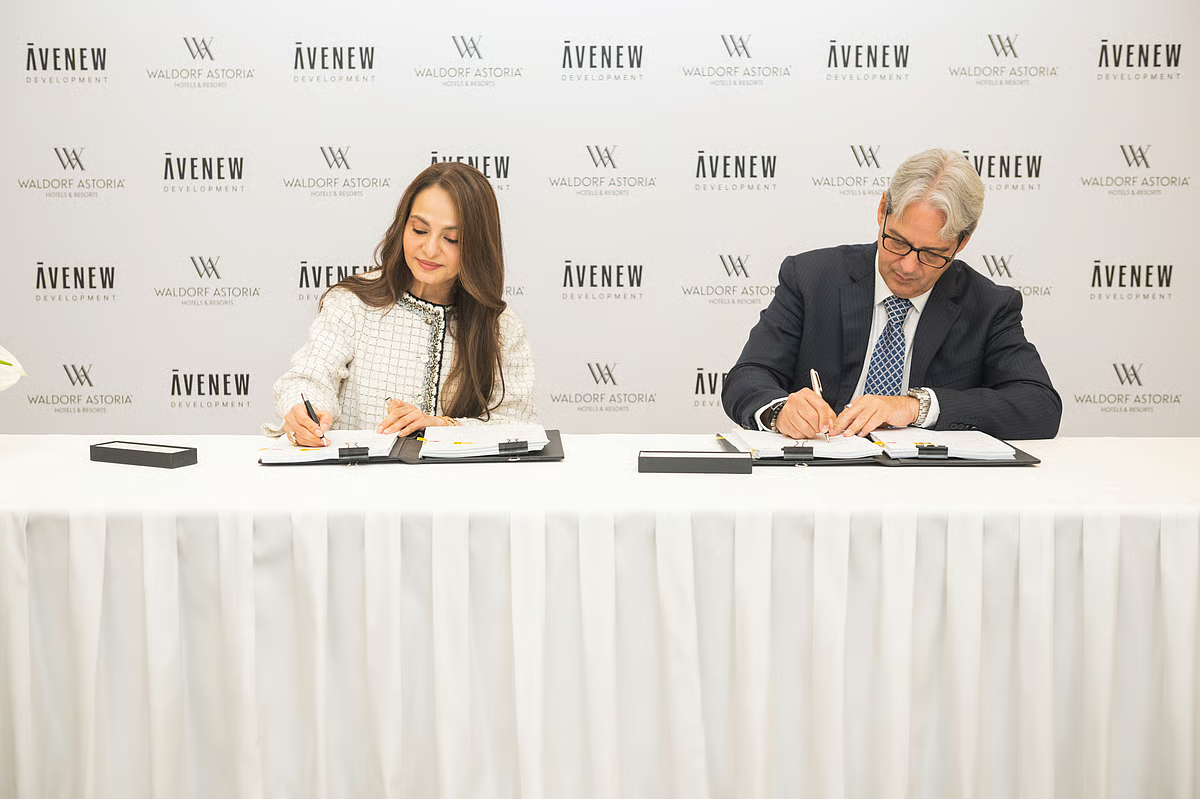
The recent announcement of a collaboration between AVENEW Development and Hilton to bring Waldorf Astoria Dubai Islands and Waldorf Astoria Residences Dubai Islands to life is precisely such a moment.
This venture is far more than a standard hotel opening or a new residential tower launch; it is a multi-layered strategic maneuver that speaks volumes about the maturity of the Dubai market, the evolution of global luxury consumption, and the sophisticated calculus of modern developers and iconic brands.
This analysis delves deep into the implications, context, and foresight embedded within this partnership, unpacking why this project is a significant bellwether for the industry.
Strategic Positioning: AVENEW’s Calculated Ascent and Portfolio Logic
AVENEW Development, while a Dubai-born entity, is not a volume-driven megadeveloper. Its strategy appears curated, focusing on selective, high-impact projects within prime master-planned communities. The Waldorf Astoria project is its sixth on Dubai Islands and its second branded residence there, indicating a deliberate, concentrated bet on the long-term prestige and viability of this specific coastal destination.
This is not diversification for the sake of growth; it is deepening expertise and dominance within a micro-market of exceptional potential.
For AVENEW, this partnership with Hilton represents a critical scaling and legitimization of its portfolio. Moving into hospitality-operated branded residences is a leap in operational complexity and brand association.
By aligning with Waldorf Astoria, a name synonymous with timeless, pedigreed luxury, AVENEW is not just building apartments; it is acquiring and integrating a century-old service ethos and global recognition into its asset. As Managing Partner Rasha Hassan articulated, this is a direct response to the “structural shift in global wealth.
” Today’s ultra-high-net-worth individual (UHNWI) is not merely buying square footage; they are buying into an ecosystem—a predictable, globally benchmarked standard of service, privacy, and lifestyle that mitigates the traditional risks and hassles of second-home ownership. AVENEW’s move signals a shift from developer to curator of branded lifestyle assets, where the real estate is the vessel, but the brand and its operational delivery are the core value proposition.
Hilton’s Expansion Play: Cementing Luxury Leadership in a Competitive Arena
For Hilton, and specifically its Waldorf Astoria Hotels & Resorts brand, this signing is a strategic masterstroke in the fiercely competitive Middle East luxury market. Dubai is a global battleground for luxury hospitality brands, with peers like Four Seasons, Mandarin Oriental, St. Regis, and Bulgari all vying for dominance. Introducing Waldorf Astoria to the nascent, high-potential Dubai Islands location allows the brand to plant its flag in a future-forward destination without directly cannibalizing its existing Dubai properties (like the iconic Waldorf Astoria Dubai Palm Jumeirah).
Carlos Khneisser’s comment on reinforcing “the growing momentum of our branded residential offering” is particularly telling. Branded residences have become a crucial, high-margin growth vector for luxury hotel groups. They offer capital-efficient expansion (typically funded by the developer) while extending the brand’s physical and emotional reach into the daily lives of an influential clientele. The 120 residences act as a permanent brand embassy, creating a community of resident-ambassadors and generating steady management fee income. In choosing AVENEW, Hilton is partnering with a developer that has demonstrable skin in the game and a proven track record within the very community, de-risking the project’s integration and long-term appeal.
The Branded Residence Evolution: From Niche to Necessity in Asset Portfolios
The press release accurately identifies the transformation of branded residences from a “niche market into a leading global asset class.” This project exemplifies the drivers behind that shift. In a world of economic volatility, tangible assets with intrinsic utility and managed services are increasingly attractive. A Waldorf Astoria Residence is positioned not just as a home, but as a credible financial asset. The brand’s management provides operational excellence, the developer’s reputation ensures construction quality, and the combined allure promises stronger rental yields and capital appreciation resilience compared to unbranded equivalents.
Furthermore, the offering directly addresses the sophisticated demands of a new generation of wealth. The modern UHNWI is time-poor and experience-rich. They value convenience, security, and seamless service. The promise of a fully furnished residence, with a single point of contact for all needs, from maintenance to concierge services like private chefs, event planning, and travel coordination, translates life’s complexities into simple, elegant solutions. Full access to the hotel’s amenities—the spa, pools, and restaurants—turns the entire development into a private club, blurring the lines between home and resort. This model has proven particularly successful in Dubai, a city built on the convergence of luxury living and hospitality.
The Dubai Islands Context: Building the Future Coastal Archetype
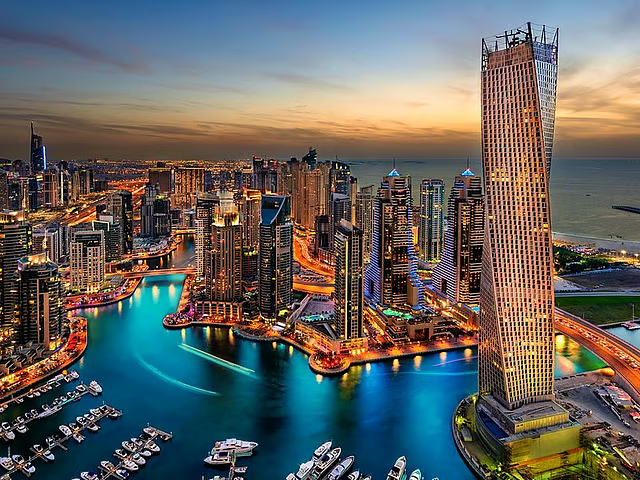
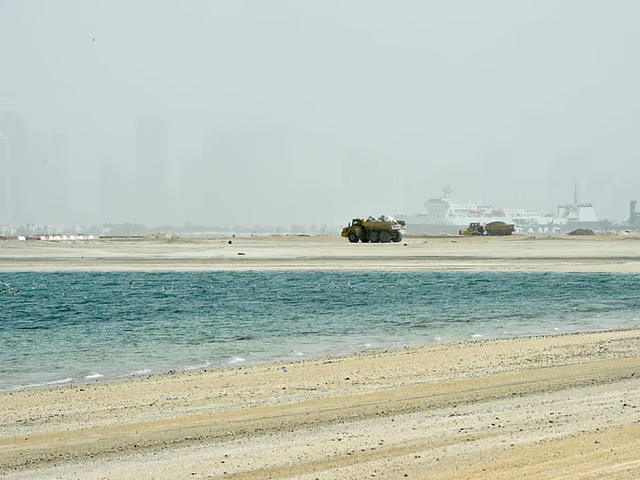
The location itself, Dubai Islands (formerly known as Deira Islands), is a critical character in this story. As one of Dubai’s most ambitious master-planned coastal developments, it represents the next frontier for upscale, sustainable waterfront living. By securing a Waldorf Astoria here, AVENEW and Hilton are placing a definitive anchor of luxury that will elevate the entire precinct’s profile. The project doesn’t just serve the islands; it defines them. It sends a powerful signal to other investors, developers, and potential homeowners about the caliber and ambition of the community.
This move aligns perfectly with Dubai’s broader vision of moving beyond a collection of iconic standalone structures towards creating comprehensive, self-sustaining lifestyle destinations. Dubai Islands is envisioned as a holistic environment with residential, retail, leisure, and hospitality woven together. The Waldorf Astoria complex will function as the social and luxury heartbeat of its segment, drawing external visitors to its dining and spa while providing an exclusive sanctuary for residents.
The Synthesis: Crafting “Enduring Value” in a Transient World
The most resonant theme from the announcement, echoed by Rasha Hassan, is the pursuit of “enduring value.” In a market sometimes perceived as focused on speculative flipping, this partnership deliberately targets a different buyer: the long-term holder, the generational investor, the individual seeking a legacy asset. Waldorf Astoria, with its storied heritage dating back to New York in 1931, carries an aura of permanence and classicism that transcends fleeting design trends. AVENEW’s commitment to “architectural excellence and functional elegance” suggests a design philosophy meant to age gracefully.
This focus on endurance is a sophisticated risk management strategy. It insulates the project from market cycles by appealing to a clientele whose purchase decision is less about short-term gain and more about long-term lifestyle enhancement and capital preservation. It builds a stable, invested community, which in turn reinforces the asset’s value. The “globally recognised service standard” of Waldorf Astoria acts as the guarantee that this enduring value will be actively maintained and curated, not just promised at the point of sale.
Conclusion: A Blueprint for the Future of Luxury Development
The AVENEW Development and Hilton partnership for the Waldorf Astoria Dubai Islands is a case study in modern luxury real estate strategy. It demonstrates how forward-thinking developers must now operate as ecosystem architects, weaving together prime location, legendary brand power, and a deep understanding of evolving wealth psychology. It shows how legacy hospitality brands must expand their physical and operational footprint through capital-light residential models. And it underscores Dubai’s unique position as a laboratory for this advanced form of place-making, where the lines between hospitality and homeownership are not just blurred but elegantly erased.
This project is not merely about adding rooms and residences to a market. It is about embedding a timeless standard of luxury into the foundation of a new coastal district. It represents a vote of confidence in Dubai’s next chapter of growth and a blueprint for how to create value that is designed not just for today’s market, but for generations to come. The true success will be measured not at the groundbreaking or the sold-out launch, but in decades hence, when the Waldorf Astoria Dubai Islands stands not as a new development, but as an established, revered landmark that fulfilled its promise of enduring, timeless elegance.